
Menu
About the Book
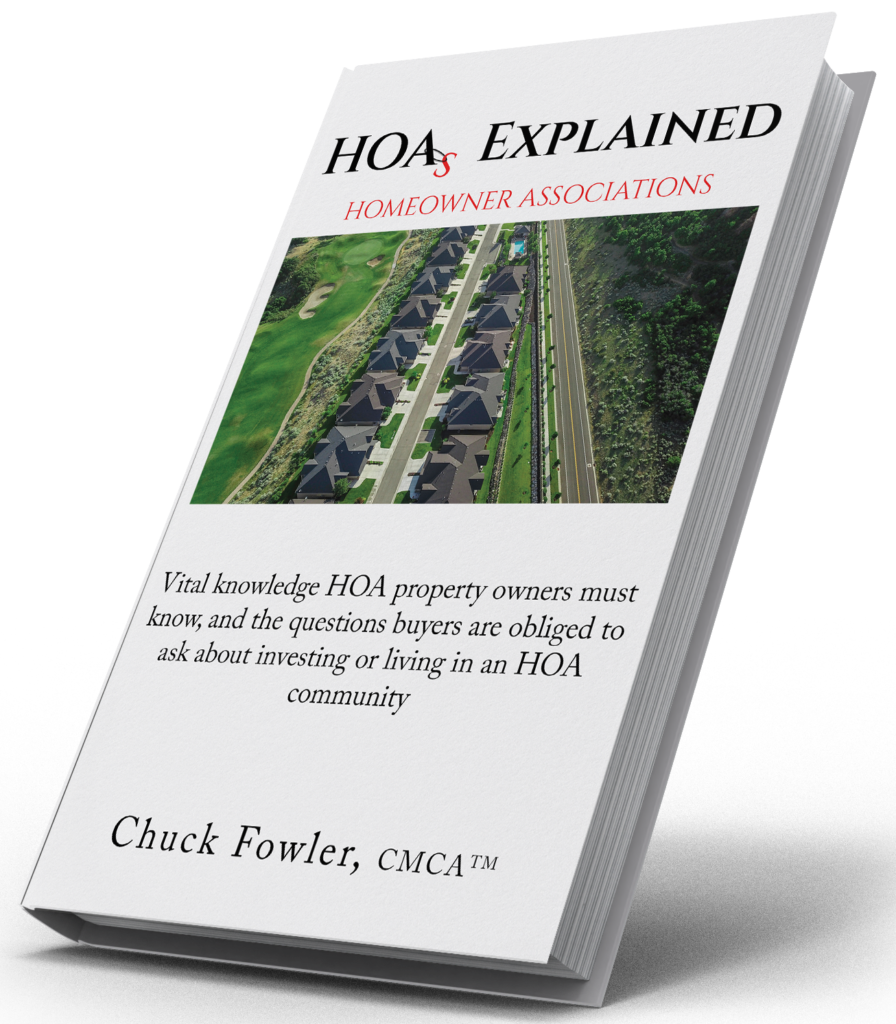
HOAs Explained
Essential insight for HOA homeowners, along with the key questions buyers should consider before purchasing or even residing in an HOA community.
By Chuck Fowler, CMCA™, a certified manager of community associations with more than 35 years of practical, real-world experience.

Why Chuck Wrote the Book
Community associations and condominium developments are built on a well-established model designed to preserve property value and support a high standard of living. In many cases, HOAs function as intended, but problems arise when buyers don’t fully understand how these communities operate.
This book is written to equip HOA homeowners and prospective buyers with the knowledge they need to be informed, recognize risks early, and safeguard both their property value and quality of life against internal and external challenges.

Challenges This Book Addresses
- Making sense of complex governing documents
- Knowing the meaningful questions to ask before buying into an HOA
- Understanding Board fiduciary duty and how it shapes policy, budget and enforcement decisions
- Identifying insurance requirements and recognizing coverage gaps
- Setting realistic expectations around architectural rules and approvals
- Protecting property value when legal, financial or operational risks arise

The Knowledge and Clarity You Will Gain
- How HOAs are created and structured from a legal standpoint
- The responsibilities of boards, managers, and individual owners
- How assessments, budgets, and reserve funding work
- Insurance obligations and where personal coverage may be required
- The due diligence steps buyers should complete before purchasing
- How homeowners can participate effectively within their HOA community
The HOA Landscape
Understanding the size, reach, and influence of homeowner associations.
35.2%
percent of U.S. Housing in community associations
66% of homes completed & 81% of homes sold
percent of housing in a community association
$124.2 billion
assessments collected from homeowners. Assessments fund many essential association obligations, including professional management services, utilities, security, insurance, common area maintenance, landscaping, capital improvement projects, and amenities like pools and club houses
30–40
percentage of community associations that are self-managed, meaning they may use professional assistance for specific projects, activities, and services, but do not employ a professional manager or management company
- Important Notice